
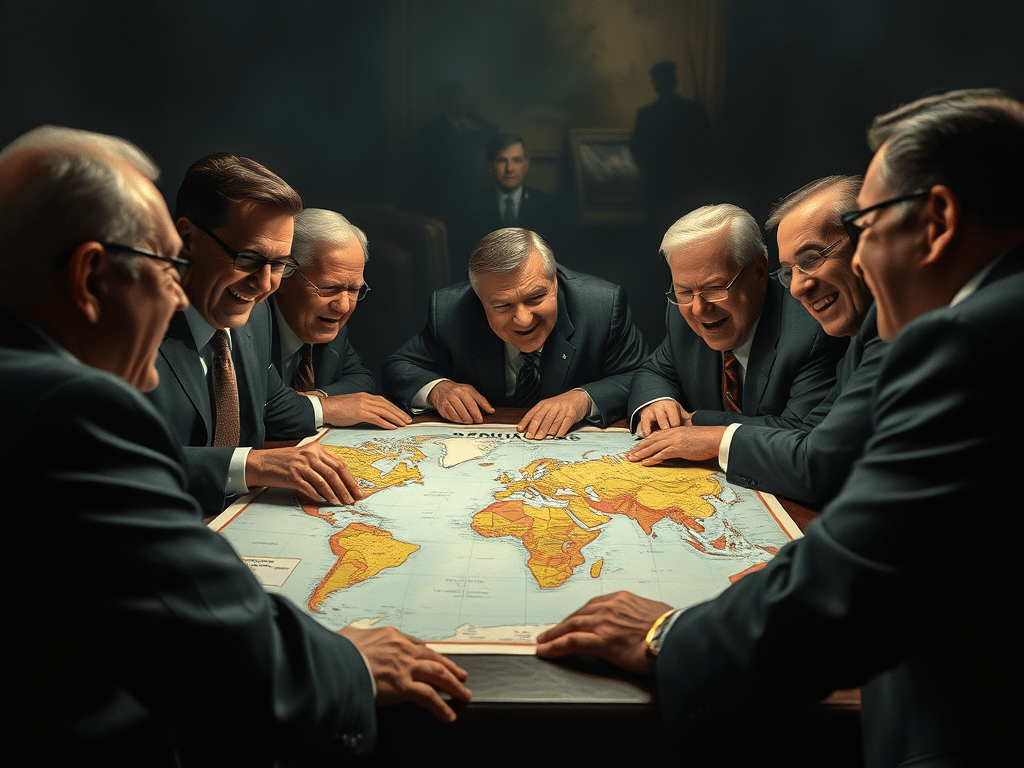
As the 2024 election approaches, the dramatic realignment of American foreign policy has become increasingly evident. Once the champions of military interventionism under Republican administrations, neoconservatives have shifted their ideological home to the Democratic Party. This realignment, which began in earnest during the Trump presidency, has reached its culmination with the Biden administration’s aggressive foreign policies in Ukraine and the Middle East. Neoconservatism—a political philosophy defined by its moral certitude, belief in U.S. global supremacy, and advocacy of interventionist policies—has found a new host in the Democratic establishment. In the process, the Democrats, once the party of anti-war protests and diplomatic caution, have become the primary advocates of global military engagements.
This transformation is not just a partisan realignment but a reflection of deep ideological shifts that have far-reaching implications. Today, as America becomes increasingly involved in Ukraine and offers unequivocal support for Israel, the same neoconservative principles that guided U.S. foreign policy in Iraq and Afghanistan are once again driving Washington’s global strategy. This time, however, the political landscape has changed: neoconservatism has fully embedded itself in the Democratic Party, leaving behind its former Republican base, which has largely embraced populist anti-interventionism.
The Roots of Neoconservatism: From Trotskyism to American Globalism
The intellectual origins of neoconservatism lie not within the Republican Party but in the disillusionment of left-wing intellectuals. Many of the early neoconservatives, such as Irving Kristol and Norman Podhoretz, were former Trotskyites, disillusioned with Stalinist communism and later, with the anti-Americanism of the New Left in the 1960s. For many of these thinkers, who were often Jewish immigrants or the descendants of Jewish immigrants from Eastern Europe, their worldview was shaped by a deep opposition to authoritarianism, as well as a belief in the moral superiority of liberal democracy.
Kristol, often regarded as the “godfather” of neoconservatism, famously described a neoconservative as “a liberal who has been mugged by reality.” This reality, as they saw it, was one in which the world was in danger of succumbing to authoritarianism and extremism if the United States did not actively intervene to uphold democratic values. In their view, America had a moral obligation to lead the world, and this leadership could not be passive. It required active intervention, particularly in regions where authoritarian regimes threatened U.S. interests or those of its allies, most notably Israel.
This ideology became formalized during the Cold War, when the neoconservative movement found common ground with Cold War liberals and anti-communists. Their fierce opposition to Soviet communism and their belief in the necessity of American leadership on the global stage brought them into alignment with the Republican Party, particularly during the Reagan era.
However, neoconservatism’s emphasis on military intervention as a tool for shaping the world order distinguished it from other strands of Cold War liberalism, which were more focused on containment and diplomacy. For neoconservatives, diplomacy without the backing of military strength was ineffective, and containment without the possibility of rollback was insufficient.
Reagan’s America: The Institutionalization of Neoconservatism
The election of Ronald Reagan in 1980 marked the institutionalization of neoconservatism within Republican foreign policy. Reagan’s staunch anti-Soviet stance, his embrace of American exceptionalism, and his willingness to use military power to confront communism made his administration a natural home for neoconservatives. Figures like Norman Podhoretz, Elliott Abrams, Richard Perle, and Jeane Kirkpatrick found influential roles in shaping U.S. foreign policy during the Reagan years. They advocated for aggressive military buildups, direct support for anti-communist insurgencies, and an uncompromising stance toward the Soviet Union.
During this period, neoconservatives also solidified their staunch defense of Israel. For many, Israel represented not only a key strategic ally in the Middle East but a moral imperative for the West. Defending Israel was seen as part of a broader struggle to protect liberal democracies from the forces of extremism and authoritarianism. This was not simply about realpolitik but about a shared set of values that made the defense of Israel integral to the defense of the West itself. The neoconservative intellectuals of this era viewed the survival and security of Israel as essential to the survival of Western democratic ideals.
It was also during the Reagan years that neoconservatives began to advocate for a more proactive use of U.S. military power, beyond simply containing communism. They believed that American power could be used to reshape entire regions, particularly the Middle East, in ways that would promote democracy and weaken authoritarianism. This vision of regime change and nation-building would become a hallmark of neoconservative foreign policy in the decades to come.
The Gulf War and the Neoconservative Agenda for the Middle East
By the time George H.W. Bush came to power, neoconservatives were deeply embedded within the Republican foreign policy establishment. The Gulf War of 1991, while ultimately limited to expelling Iraqi forces from Kuwait, revealed the neoconservative desire for a more assertive U.S. military posture in the Middle East. Many neoconservatives believed that the war should have been used as an opportunity to remove Saddam Hussein from power and establish a pro-American regime in Iraq. Although Bush refrained from pursuing regime change, fearing that it would destabilize the region, the desire for such an outcome remained central to neoconservative thinking.
Throughout the 1990s, neoconservatives continued to push for a more aggressive U.S. foreign policy, particularly in the Middle East. They believed that the post-Cold War world presented an opportunity for the United States to reshape global politics in its favor. For neoconservatives, the absence of a direct superpower rival meant that the U.S. could act as a unipolar hegemon, enforcing a liberal world order through military intervention and diplomatic pressure. This vision was articulated most clearly in the formation of the Project for the New American Century (PNAC) in 1997, a think tank that advocated for a more assertive U.S. military policy and called for regime change in Iraq.
In a 1998 letter to President Bill Clinton, PNAC urged the administration to adopt a policy of regime change in Iraq, warning that Saddam Hussein’s regime posed a significant threat to U.S. interests. Signatories to the letter included prominent neoconservatives like Paul Wolfowitz, Richard Perle, and Donald Rumsfeld. The letter argued that removing Saddam from power would create the conditions for a more stable and democratic Middle East, a belief that would later underpin the Bush administration’s approach to the region.
The Global War on Terror: Neoconservatism’s Triumph and Downfall
The terrorist attacks of September 11, 2001, provided the catalyst for the full realization of the neoconservative foreign policy agenda. In the wake of the attacks, President George W. Bush adopted a neoconservative vision of U.S. foreign policy, framing the Global War on Terror as a moral crusade to spread democracy and defeat tyranny. The invasion of Afghanistan, and later Iraq, were seen not just as necessary responses to terrorism but as opportunities to reshape the Middle East through regime change and democratization.
Key neoconservative figures like Paul Wolfowitz, Douglas Feith, and Richard Perle were instrumental in shaping the Bush administration’s response to 9/11. Their focus quickly shifted from Afghanistan to Iraq, which they viewed as the linchpin in a broader strategy to remake the Middle East.
The invasion of Iraq in 2003 was justified on the grounds of eliminating Saddam Hussein’s WMDs and ending his support for terrorism, but the broader goal was to establish a democratic government that could serve as a model for the region. Neoconservatives believed that a free Iraq would catalyze democratic revolutions across the Middle East, undermining authoritarian regimes and weakening the influence of groups like al-Qaeda.
However, the Iraq War would ultimately expose the flaws in the neoconservative vision of regime change and democratization. The failure to find WMDs, the rise of violent sectarianism, and the emergence of ISIS in the aftermath of the war demonstrated the limits of American military power and the unintended consequences of intervention. By the time Barack Obama was elected in 2008, there was a widespread recognition that the neoconservative approach to foreign policy had failed. The war had not only cost thousands of American lives and trillions of dollars, but it had also destabilized the region and fueled the rise of Islamist extremism.
The Trump Era and the Neoconservative Exodus
The rise of Donald Trump in 2016 marked a turning point for neoconservatives. Trump’s “America First” foreign policy, with its emphasis on nationalism, isolationism, and skepticism of military interventions, was a direct repudiation of the neoconservative worldview. Trump’s criticisms of the Iraq War as a “disaster” and his reluctance to engage in new conflicts alienated many neoconservatives, who had long believed in the necessity of American global leadership through military intervention.
Faced with a Republican Party that was increasingly populist and anti-interventionist, many neoconservatives began to shift their allegiance to the Democratic Party. Figures like Bill Kristol, Robert Kagan, and Max Boot became vocal critics of Trump, accusing him of abandoning America’s role as the guarantor of global stability. They found a more receptive audience among Democrats, particularly those aligned with Hillary Clinton, whose hawkish foreign policy positions on issues like Syria and Libya mirrored neoconservative priorities.
The election of Joe Biden in 2020 solidified this realignment. Biden’s foreign policy, shaped by figures like Secretary of State Antony Blinken and Undersecretary of State Victoria Nuland, has been deeply influenced by neoconservative ideals. Blinken and Nuland, both of whom played key roles in shaping U.S. policy during the Obama administration, have been at the forefront of the Biden administration’s aggressive posture toward Russia and its unwavering support for Ukraine. Nuland, in particular, has been a central figure in U.S. policy toward Ukraine since the 2014 Maidan uprising, when she advocated for closer ties between Ukraine and the West and supported efforts to counter Russian influence in the region.
Ukraine and Israel: The New Neoconservative Battlegrounds
Since Russia’s invasion of Ukraine in February 2022, the Democratic Party has embraced the neoconservative framing of the conflict as an existential struggle between liberal democracy and authoritarianism. For neoconservatives, Ukraine represents the frontline in a broader global battle for the preservation of the liberal world order. The war in Ukraine has provided neoconservatives with a new moral crusade, one that echoes the rhetoric of the Global War on Terror. In their view, Ukraine’s struggle is not just about territorial integrity; it is about defending Western values from the encroachment of Russian authoritarianism.
The Biden administration’s approach to the Ukraine conflict, driven by figures like Blinken and Nuland, has prioritized military aid and sanctions over diplomacy. The U.S. has committed billions of dollars in military support to Ukraine, providing advanced weapons systems and intelligence that have escalated the conflict and drawn the U.S. deeper into a proxy war with Russia. This neoconservative approach, which frames the conflict in stark, binary terms—democracy versus tyranny—leaves little room for negotiation or compromise. It has raised the risk of a broader confrontation between NATO and Russia, with potentially catastrophic consequences for global stability.
At the same time, U.S. support for Israel remains a central pillar of neoconservative foreign policy. Following the Hamas attack on Israel in October 2023, the Biden administration quickly reaffirmed its commitment to Israel’s security, ramping up military aid and support for Israeli military operations in Gaza. For neoconservatives, Israel’s defense is not just a matter of strategic importance but a moral obligation. Figures like Blinken, Nuland, and National Security Advisor Jake Sullivan have reinforced the belief that America has a duty to defend Israel as part of a broader struggle against Islamist extremism.
The Risks of Perpetual War and Interventionism
The neoconservative realignment within the Democratic Party presents significant risks for U.S. foreign policy. The war in Ukraine has escalated into a protracted conflict with no clear end in sight, and the potential for a direct confrontation between NATO and Russia looms large. The Biden administration’s approach, shaped by neoconservative ideals, has prioritized military aid over diplomacy, raising the stakes of the conflict and increasing the risk of a broader war.
In the Middle East, U.S. support for Israel’s military operations following the October 2023 attacks risks drawing the U.S. deeper into the region’s complexities. The possibility of a wider regional war involving Iran, Hezbollah, and other actors is real, and the U.S. commitment to Israel’s defense could entangle America in another prolonged conflict. Neoconservatives continue to push for a hardline stance against Iran, but the broader implications of this policy—particularly the risk of a regional conflagration—are deeply concerning.
The New Face of Neoconservatism in 2024
As the 2024 election nears, it is clear that the Democratic Party has fully embraced the neoconservative foreign policy agenda. Figures like Antony Blinken and Victoria Nuland have become the standard-bearers for a foreign policy that prioritizes military intervention and regime change, continuing the legacy of the Bush administration’s Global War on Terror. The Democratic Party, once the party of restraint and diplomacy, has become the new home of neoconservative interventionism, with all the risks that entails.
The wars in Ukraine and the Middle East show no signs of being resolved through military means alone, yet the neoconservative influence within the Democratic Party leaves little room for alternative strategies. As America heads into the 2024 election, the choices are stark: continue down the path of endless war and global interventionism, or reconsider the role of the U.S. in a rapidly changing world. The future of American foreign policy hangs in the balance, and the stakes have never been higher.
 jerusalemandathens.com