
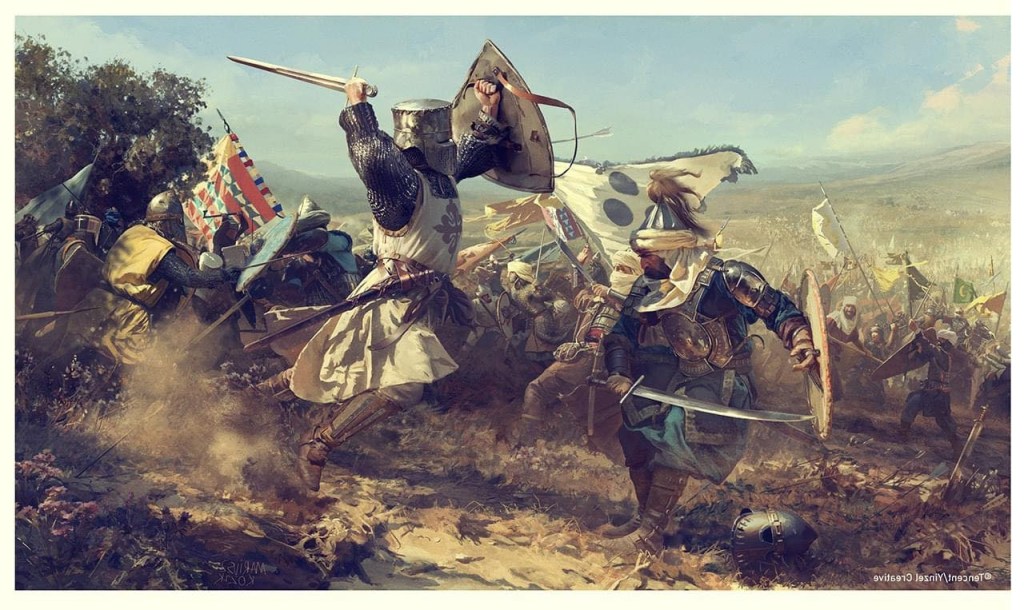
Introduction: A Mosque and a Church—Contrasting Masculine Aesthetics
Recently, I visited a mosque and experienced something strikingly different from what I had become accustomed to in churches across the West. Standing in the mosque’s main area, surrounded by about 200 men, I immediately noticed the sense of order, focus, and discipline. There was a militaristic precision in how the men stood shoulder to shoulder, moving in unison during prayer. Bearded and focused, they projected an aura of strength, purpose, and calm submission to a higher power. It was a far cry from the modern churches I’ve encountered, where pastors and parishoners alike often seem more concerned with appearing relatable and trendy. In many of these churches, emotional vulnerability is at the forefront, and the aesthetics of masculinity lean towards the soft, effete, and self-deprecating.
The contrast was clear. The mosque had a palpable sense of masculine energy. This energy was rooted in discipline and submission to divine law. The churches, by comparison, felt more concerned with emotional expression, relational harmony, and the compassionate dimensions of spirituality. This experience compelled me to reflect on how these two Abrahamic traditions construct masculinity—and why the difference matters in today’s world.
As the West faces profound cultural and ideological shifts, particularly the rise of ideologies like wokeism and the increasing presence of Islamic communities through immigration, the contrasting models of masculinity in Christianity and Islam are becoming more significant. The West’s crisis of masculinity—where traditional gender roles are deconstructed or outright rejected—stands in stark contrast to the more coherent and disciplined model of masculinity offered by Islam. This essay explores the theological kernels that define masculinity in Christianity and Islam, the implications of these models for the West, and why, unless Christianity reclaims a stronger and more virile form of masculinity, it may struggle to hold its ground against both ideological and demographic changes.
Christian Masculinity: Compassion, Martyrdom, and a Decline of Assertiveness
The Christian concept of masculinity is deeply embedded in the teachings and example of Jesus Christ. At the heart of Christianity is a moral framework that emphasizes compassion, forgiveness, and love for one’s enemies. Jesus’ life and martyrdom provide the quintessential model for Christian masculinity—he embraced suffering, turned the other cheek, and sacrificed himself for the sake of others. His call for Christians to “love your enemies” and “turn the other cheek” establishes a form of masculinity that prioritizes relationality, vulnerability, and self-sacrifice over physical strength, dominance, or leadership in a traditional sense.
This theological focus on love and compassion has profound implications for how masculinity is expressed in Christian societies. It creates a tension between the moral ideals of the faith and the practical demands of leadership and societal defense. Historically, moments like the Crusades allowed for a more assertive form of Christian masculinity to emerge, where defense of Christendom justified warfare and masculine strength. The Crusades were, in many ways, Christianity’s metaphysical high point in terms of virile masculinity—a response to centuries of Muslim expansion that allowed Christian men to engage in warfare under the banner of religious duty.
However, the Crusades represented an aberration within the broader Christian tradition. The underlying moral emphasis on peace, forgiveness, and love eventually reasserted itself, leading to a distancing from the more combative expressions of masculinity. Over time, Christianity, particularly in the West, became increasingly focused on emotional expressiveness, relational dynamics, and a more egalitarian view of gender roles. This shift has only intensified in the modern era, where mainstream Christian masculinity is largely characterized by emotional vulnerability, compassion, and a reluctance to engage in assertive leadership. Pastors, particularly in Protestant megachurches, often embody a soft, relatable persona, preaching messages of love, tolerance, and emotional openness.
This softening of Christian masculinity has been exacerbated by the rise of wokeism in the West. Wokeism, with its critique of traditional gender roles and emphasis on egalitarianism, deconstructs traditional masculine virtues such as strength, assertiveness, and leadership. In this ideological context, Christian masculinity—already inclined toward compassion and emotional vulnerability—has been further eroded. Churches have struggled to provide a coherent response to these cultural trends, often capitulating to the demands of ideological progressivism in an attempt to remain relevant. The result is a form of Christian masculinity that is increasingly disconnected from traditional expressions of masculine strength and leadership.
Despite this trend, there are those who argue that Christianity’s emphasis on love and compassion represents a more evolved form of masculinity, one that transcends the need for physical strength or assertiveness. They argue that the true strength of Christian masculinity lies in its moral integrity, its capacity for forgiveness, and its ability to embrace vulnerability in the face of suffering. From this perspective, Jesus’ call to love one’s enemies and turn the other cheek reflects a higher moral calling, one that values emotional and spiritual strength over physical dominance. This view positions Christian masculinity as a counterweight to the aggressive, competitive forms of masculinity that have historically dominated Western culture.
However, the historical record suggests that this form of masculinity struggles to function effectively in the realm of governance, leadership, and societal defense. When Christianity has attempted to reconcile its theological commitments to peace and compassion with the demands of power and authority, as seen in the Crusades, the result has often been tension and eventual retreat from assertiveness. Today, this tension is more apparent than ever, as Western societies increasingly devalue traditional masculine roles and celebrate more emotive, egalitarian expressions of gender.
Islamic Masculinity: Submission, Discipline, and a Coherent Model of Strength
In contrast to Christianity’s focus on compassion and martyrdom, Islamic masculinity is rooted in submission to divine law and the responsibilities that come with leadership, protection, and justice. At the core of Islamic theology is the concept of submission—Islam means submission to the will of God. This submission is not passive or purely spiritual; it is expressed through disciplined adherence to divine law (Shari’a) and the active fulfillment of duties as a leader, protector, and enforcer of justice within the family and community.
Islamic masculinity, therefore, integrates strength, discipline, and responsibility into a coherent model that balances spiritual submission with practical leadership. Men in Islamic communities are expected to lead prayers, defend their families, and uphold justice, both in private and public life. This masculine ideal is reinforced through religious practices such as Salat (prayer), fasting, and jihad—a concept often misunderstood in the West. Jihad refers not only to warfare in defense of the Muslim community but also to the internal struggle to live in accordance with God’s will. This duality ensures that Islamic masculinity is both internally disciplined and externally assertive.
The life of the Prophet Muhammad exemplifies this integration of strength, compassion, and leadership. Muhammad was not only a spiritual guide but also a military leader, a statesman, and a family man. His life provides a model for Muslim men to emulate, one that balances spiritual devotion with practical responsibilities. This coherence in Islamic masculinity stands in stark contrast to the fragmented model found in much of modern Christianity, where the tension between theological ideals and practical demands has led to a weakening of traditional masculine virtues.
In the modern context, Islamic masculinity remains robust and resilient, even in the face of ideological movements like wokeism. Unlike Christianity, which has often softened in response to cultural pressures, Islam has maintained a clear and consistent model of masculine leadership, discipline, and responsibility. Islamic communities, particularly in Europe and the West, continue to uphold these traditional masculine ideals, providing a stark contrast to the more fragmented and emotive models of masculinity prevalent in Western culture.
Some critics argue that this adherence to traditional masculine roles in Islamic communities can lead to rigid or oppressive gender norms. They claim that the emphasis on male authority and leadership can result in patriarchal structures that limit the autonomy of women. However, defenders of Islamic masculinity argue that these critiques often stem from misunderstandings of Islamic teachings and that, in practice, the model of masculine leadership in Islam is tempered by ethical responsibilities, compassion, and justice. Islamic masculinity, they argue, provides a balance between strength and compassion that is lacking in many modern Western conceptions of gender.
The Decline of Western Masculinity and the Rise of Islamic Masculinity in Europe
The West today faces a profound identity crisis, one that is deeply tied to the decline of traditional masculinity. As ideologies like wokeism gain cultural and political influence, traditional gender roles are being systematically deconstructed. Masculinity, in particular, is often portrayed as toxic or inherently oppressive, leading to a cultural environment where strength, assertiveness, and leadership are devalued. This ideological shift has been particularly damaging to Christianity, whose theological commitments already lean toward softer, more emotive expressions of masculinity.
In contrast, Islamic communities in Europe and the West are experiencing demographic and cultural growth. These communities maintain strong, coherent models of masculinity that emphasize discipline, leadership, and responsibility. As Western societies continue to grapple with the erosion of traditional gender norms, Islamic masculinity offers a compelling alternative—one that is grounded in a consistent theological framework and reinforced through religious practice. This growing contrast between Western and Islamic models of masculinity raises important questions about the future of gender roles and leadership in Europe and the West.
Islamic immigration to the West brings not only new religious and cultural influences but also a model of masculinity that is resilient to the ideological shifts taking place in Western societies. Islamic masculinity, with its emphasis on leadership, strength, and submission to divine law, stands in stark contrast to the softer, more fragmented models of masculinity that dominate Western culture. This contrast is particularly evident in Europe, where Islamic communities are growing both demographically and culturally, while traditional Christian communities struggle to maintain their influence.
Conclusion: The Future of Masculinity in the West
The future of masculinity in the West is increasingly defined by the tension between two competing models—one rooted in the soft, compassionate masculinity of Christianity, and the other grounded in the disciplined, assertive masculinity of Islam. Christianity, unless it reclaims a more virile and assertive form of masculinity, may continue to lose ground to both ideological movements like wokeism and the growing influence of Islamic communities. The theological kernel of Christianity, with its emphasis on love, peace, and forgiveness, struggles to offer a coherent response to the challenges of modernity, particularly in a cultural landscape that increasingly devalues traditional masculine virtues.
Islam, by contrast, presents a consistent and resilient model of masculinity that integrates strength, leadership, and compassion in a way that is both theologically coherent and practically adaptable. As Europe and the West continue to face demographic and ideological shifts, Islamic masculinity may offer a more compelling vision of leadership and strength—one that is grounded in a deep metaphysical framework and capable of withstanding the cultural pressures that are reshaping the Western world.
In the end, the survival of traditional masculinity in the West may depend on which of these metaphysical models proves more adaptable, coherent, and resilient in the face of modern challenges. If Christianity cannot resolve its internal tensions and reclaim a more assertive form of masculinity, it may find itself increasingly overshadowed by the disciplined, virile masculinity that Islam offers—both in the spiritual and cultural spheres.
 jerusalemandathens.com