
Introduction
The “Riddle of Steel,” as depicted in John Milius’s 1982 film Conan the Barbarian, serves as a profound allegory. It encapsulates the tension between materiality and will, power and spirit. I will dissect the riddle through an examination of the dualistic themes it presents. It specifically focuses on the symbolic interplay between steel, representing tangible strength, and flesh, symbolizing will and human agency. I then engage with philosophical underpinnings, particularly Nietzschean thought. The synthesis of these elements culminates in an understanding of power as an integrated force.
Contextual Framework
The film’s narrative is heavily rooted in a mytho-historical context, where the struggle for power is a central theme. Conan’s father introduces the notion of the “Riddle of Steel,” framing it as the ultimate mystery that governs the world. Steel, in this context, is not merely a material substance. It is a metaphor for the external, empirical manifestations of power—strength, weapons, and the technological advancements that define civilizations. In contrast, Thulsa Doom, the film’s antagonist, posits a counter-argument. He believes that true power lies not in the physicality of steel but in the flesh. It is the will to command, the ability to inspire, or dominate through sheer force of personality and ideology.
The Nietzschean Foundation
The film opens with a quote from Friedrich Nietzsche: “That which does not kill us makes us stronger.” This aphorism sets the philosophical tone of the narrative and serves as a meta-narrative guiding Conan’s journey. Nietzsche’s philosophy, particularly the concepts of the Übermensch and the will to power, underpins the evolution of Conan’s character. Nietzsche’s Übermensch transcends conventional morality and societal constraints, forging a new path through sheer will. Conan’s journey starts with him as a powerless child. He transforms into a mighty warrior. The trials and tribulations he faces serve to forge his character. They combine the raw strength of steel with the indomitable resilience of flesh.
Steel as Material Power
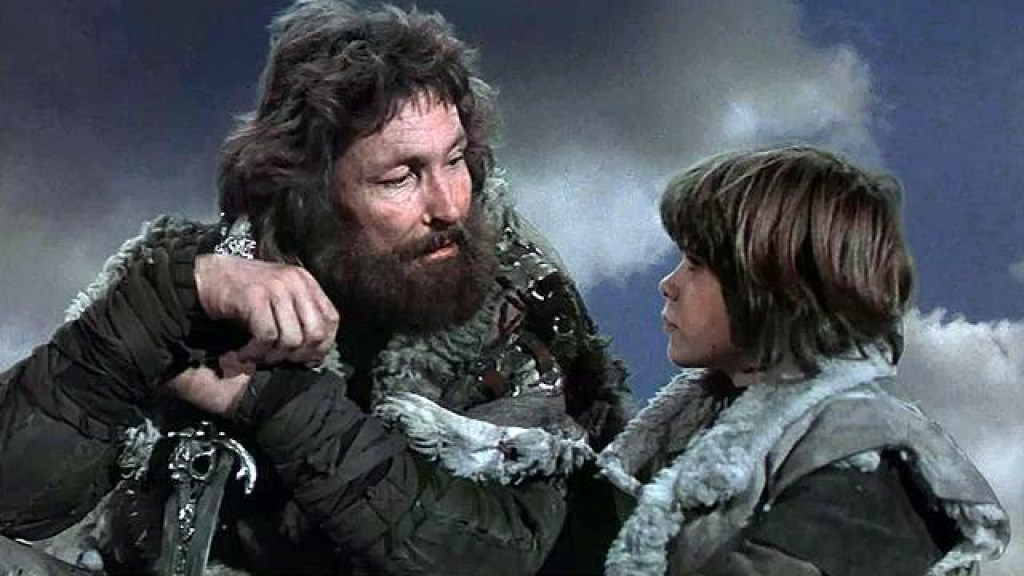
At the beginning of the film, Conan’s father introduces the “Riddle of Steel” to a young Conan. He does this in a stark, almost mythic dialogue. This sets the tone for Conan’s understanding of the world. He says, “The secret of steel has always carried with it a mystery. You must learn its riddle, Conan. You must learn its discipline. For no one, no one in this world can you trust. Not men, not women, not beasts… This you can trust.” Here, steel is depicted as a constant. It is an immutable force upon which one can rely in a world full of uncertainties and betrayals.
This lesson reflects a worldview grounded in materialism and determinism. The sword, crafted from steel, is not just a weapon. It is a symbol of human mastery over nature. It is a product of fire and force. In this sense, steel represents technology and human advancement. It echoes the Nietzschean concept of the Übermensch. The Übermensch transcends natural limitations through willpower and creativity. Conan’s father emphasizes that steel, as a tool of power, is something tangible that can be trusted. It is unlike the fickle nature of human relationships and the unpredictability of the world.
Flesh as Will and Influence
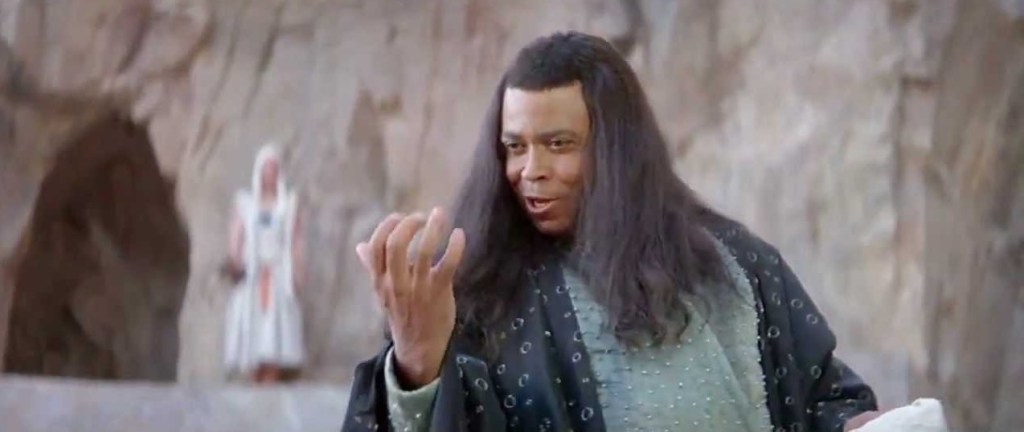
Flesh, as posited by Thulsa Doom, symbolizes the will to power, an idea central to Nietzschean philosophy. Doom’s ability to command the absolute devotion of his followers is extraordinary. They willingly sacrifice their lives at his command. This demonstrates the supremacy of psychological and ideological power over mere physical strength. This ideology reflects a form of existentialist thought. In this thought, power is rooted not in material possessions or physical might. Instead, it is found in the capacity to shape and control the perceptions, beliefs, and actions of others.
“Steel isn’t strong, boy, flesh is stronger!” This declaration by Thulsa Doom challenges the earlier teachings Conan receives from his father. The statement underscores the limitations of viewing steel as the sole source of power. In this scene, Doom manipulates one of his followers to leap to her death. This illustrates that flesh—human will and devotion—can command actions that no weapon can compel. This moment encapsulates the idea that while steel represents external, objective power. Flesh embodies the subjective, internal power that arises from belief. Loyalty and the psychological dominance one can exert over others also play a role.
Doom’s philosophy is rooted in the understanding that the human will is malleable. It can be shaped through influence, fear, and charisma. His command over his cult shows how human agency can be used to control others. He does this without the need for physical force. This is a power that can be seen as more profound and insidious. It does not rely on the externalities of weapons or armies. Instead, it depends on the internal submission of individuals to a higher will.
The Synthesis of Steel and Flesh: The Interdependence of Material and Will
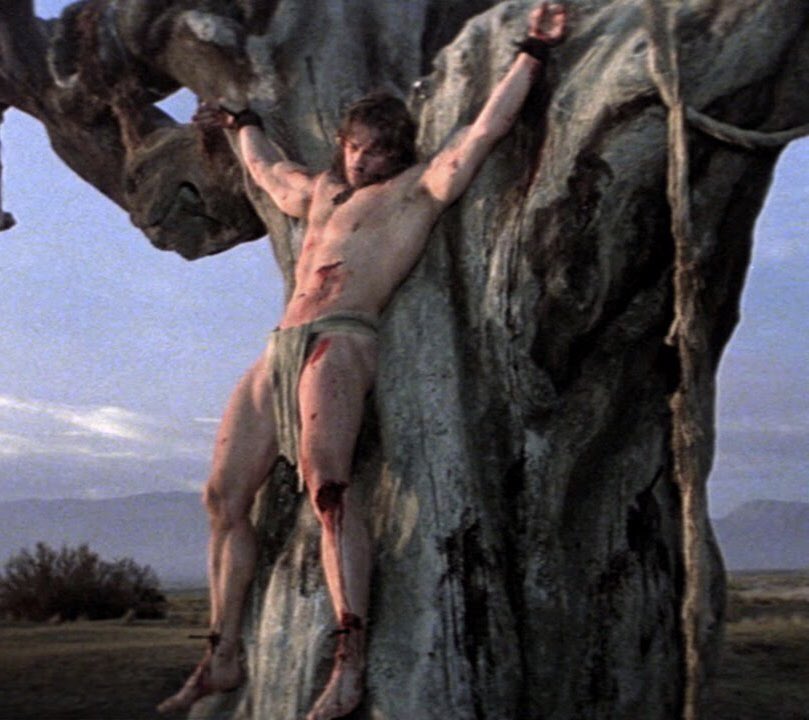
Conan’s journey throughout the film is one of synthesis. He learns that neither steel nor flesh alone is sufficient to attain true power. His initial failures highlight the limitations of relying solely on one aspect of power. When Conan infiltrates the cult unarmed, he relies solely on his will and cunning. He is captured and crucified. This demonstrates the insufficiency of willpower without the means to defend oneself physically. This failure underscores the need for material power as a foundation for action.
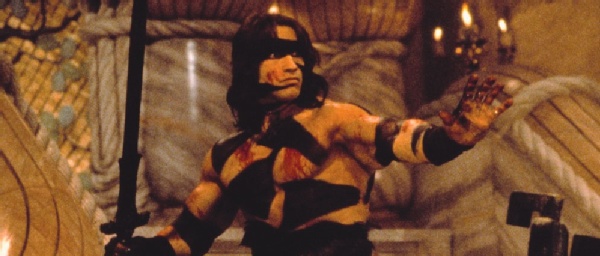
Conversely, when Conan leads an armed assault on Doom’s orgy, relying on steel and brute force, the attack ultimately fails. Conan and his companions cause chaos. However, Valeria, one of Conan’s companions, is killed by Thulsa Doom. The evil wizard uses a fleshly arrow made from a snake to slay her. Conan’s attack illustrates that physical power, when devoid of strategic insight and psychological preparation, can lead to failure. This reinforces the idea that steel, without the guidance of a strong will and strategic acumen, is inadequate.
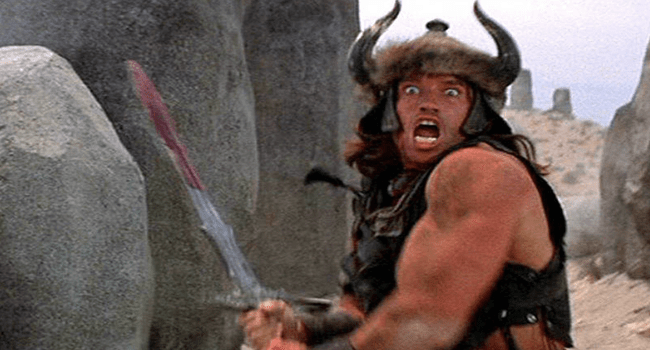
The Battle of the Mounds is the climax of the film. It serves as a critical moment where Conan successfully integrates the lessons of both steel and flesh. Here, Conan prepares meticulously, sharpening his weapons and setting traps, symbolizing his mastery of steel. At the same time, he relies on his cunning. He uses strategic planning and the loyalty of his companion Subotai. This symbolizes his understanding of the power of flesh. This battle is a turning point. Conan’s synthesis of material power and psychological resilience enables him to defeat Doom’s forces.
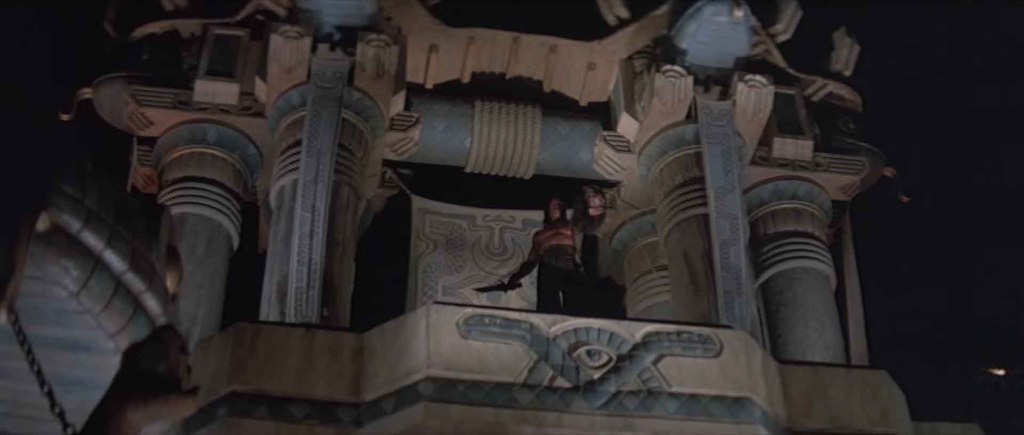
The final confrontation with Thulsa Doom is where the synthesis of steel and flesh reaches its zenith. Conan’s beheading of Doom and the subsequent display of the severed head alongside the broken sword are deeply symbolic. The broken sword represents the limitations of steel when divorced from the will that wields it. Doom’s severed head symbolizes the fragility of flesh, or will, when it lacks the material means to defend itself. By holding both aloft, Conan demonstrates that true power arises from the integration of these two forces. True power comes from steel and flesh, material and will.
Philosophical Implications
The interplay between steel and flesh in Conan the Barbarian offers a profound commentary on the nature of power. It also explores its ethical dimensions. It suggests that true strength is not merely a function of physical capability but also of moral and psychological integrity. This perspective aligns with existentialist thought. It particularly aligns with the works of Sartre and Camus. These works emphasize the importance of authenticity, freedom, and the individual’s capacity to shape their destiny.
Moreover, the riddle underscores the ethical responsibility inherent in wielding power. Steel, without the guiding influence of flesh, can lead to brute force and tyranny. Conversely, flesh, devoid of the grounding reality of steel, risks devolving into mere ideology and fanaticism. The balanced integration of both elements is essential for the just and effective exercise of power.
Conclusion
The Riddle of Steel in Conan the Barbarian encapsulates a exploration of power, materiality, and human nature. Through the dialectic of steel and flesh, the narrative reveals a nuanced understanding of power. It shows power as a dynamic interplay between physical strength and psychological resilience. This integrated perspective offers valuable insights into the ethical and philosophical dimensions of power. It emphasizes the importance of balance, integrity, and the responsible exercise of authority.
The Riddle of Steel is not merely a narrative device. It is a profound philosophical inquiry into the nature of power. It reflects timeless themes that resonate across historical and cultural contexts. Conan’s final act is holding aloft the severed head and broken sword. This act visually encapsulates the lesson that both steel and flesh are essential. Each is weak without the other. This act solves the riddle. It embodies the integrated essence of true power. It proves that enduring trials and integrating lessons from both flesh and steel are key to true strength.
 jerusalemandathens.com